July 3, 2026
How AI Agents Are Replacing Traditional Customer Support
Discover how AI agents are changing customer support with faster responses, lower costs, and better service at scale.

How AI Agents Are Replacing Traditional Customer Support
Customer support has always been a balancing act: respond quickly, stay accurate, keep costs under control, and deliver a consistent experience across every channel. For years, businesses relied on large support teams, rigid scripts, and ticket queues to manage demand. That model still works in some cases, but it is becoming harder to sustain as customer expectations rise and support requests become more complex.
AI agents are changing that equation. They are not just chatbots with better branding. Modern AI agents can understand intent, pull information from connected systems, complete tasks, and resolve many customer issues without human intervention. For businesses that want to scale efficiently, this shift is difficult to ignore.
What AI agents actually do
Traditional customer support usually depends on humans reading a message, interpreting the issue, and deciding what to do next. AI agents can handle much of that process automatically.
A well-designed AI agent can:
- Answer common questions instantly
- Guide customers through troubleshooting steps
- Look up order, account, or subscription details
- Process routine requests like resets, updates, or cancellations
- Route complex issues to the right human team with context
- Learn from previous interactions and improve over time
This matters because support is often not about deep problem-solving. In many cases, it is about speed, consistency, and access to information. AI agents are well suited for those jobs.
Why traditional support models are under pressure
Legacy support models create friction in predictable ways. Customers wait in queues. Agents spend time on repetitive questions. Teams struggle to maintain consistency across shifts, channels, and geographies. As volume increases, costs rise quickly.
The core problem is that traditional support scales linearly. More customers usually means more tickets, more agents, and more overhead. That is expensive and operationally difficult.
AI agents change the scale equation. Once deployed properly, they can handle high volumes of repetitive requests at any hour without the same staffing burden. They also reduce the load on human support teams, allowing people to focus on escalations, edge cases, and relationship-driven service.
How AI agents improve customer experience
There is a common assumption that automation makes support feel colder. In practice, the opposite is often true when AI is implemented well. Customers usually want three things: fast answers, clear next steps, and fewer handoffs.
AI agents help deliver all three.
Faster responses
Most customers do not want to wait for a first reply when their question is simple. An AI agent can respond immediately, which lowers frustration and improves satisfaction.
24/7 availability
Customers do not follow support schedules. AI agents can provide round-the-clock assistance across time zones without increasing headcount.
More consistent answers
Human agents may interpret policy differently or rely on incomplete notes. AI agents can draw from approved knowledge sources and deliver more consistent responses.
Better handoffs
When a request does require a human, the AI agent can gather context first. That means the customer does not have to repeat themselves, and the support team starts with better information.
The business impact goes beyond support
Replacing parts of traditional support with AI agents is not only a service improvement. It is also a business operations decision.
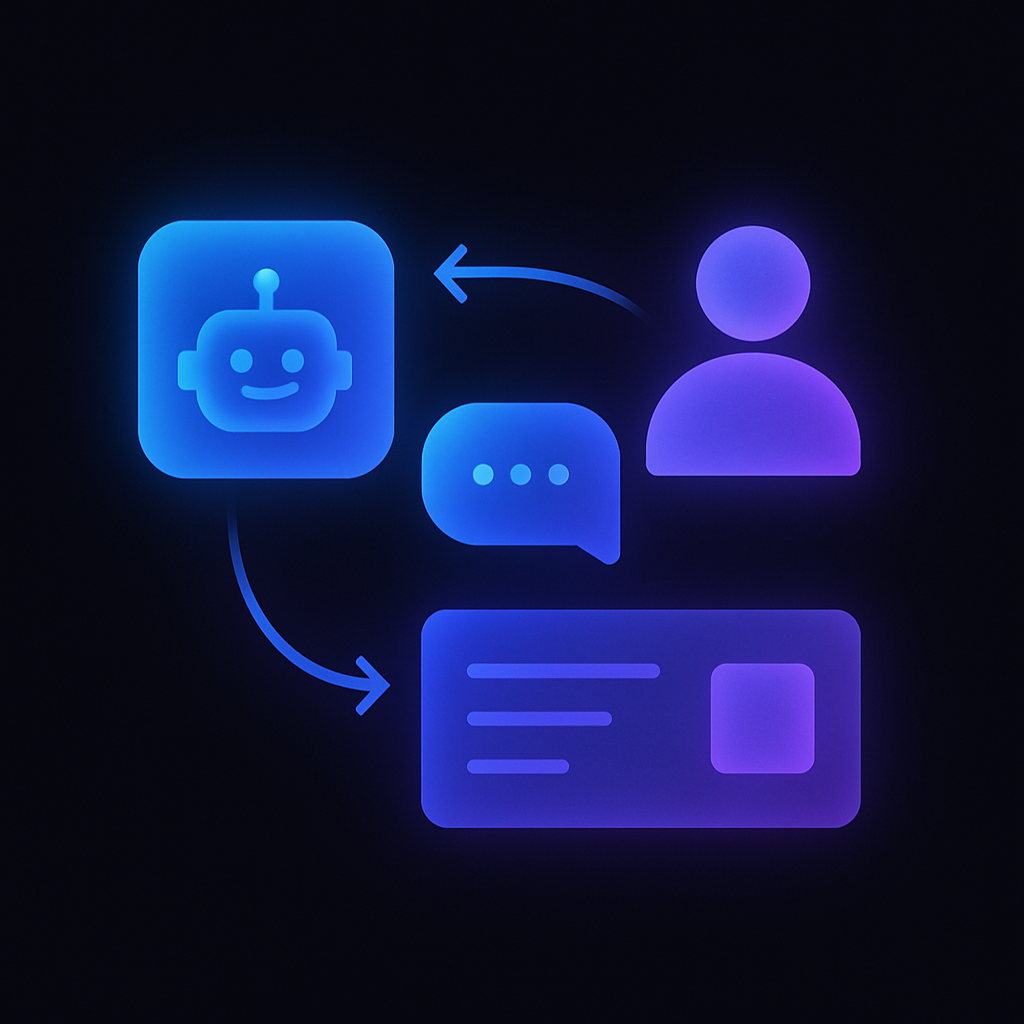
Support teams often sit at the center of customer experience, product feedback, and operational inefficiency. AI agents can reduce ticket volume, expose recurring issues, and create better visibility into what customers actually need.
That creates ripple effects across the business:
- Product teams see common bugs and confusion faster
- Operations teams can automate recurring workflows
- Marketing teams can identify messaging gaps that cause avoidable questions
- Leadership gains a clearer view of support cost and service quality
In other words, AI agents do more than deflect tickets. They help companies build a more efficient and responsive customer operation.
What AI agents still should not replace
AI agents are powerful, but they are not the right answer for every interaction. Businesses that get the best results usually define clear boundaries.
Human support is still essential for:
- Sensitive or emotional customer situations
- Complex account or billing disputes
- High-value enterprise relationships
- Exceptions that require judgment or approval
- Issues involving legal, compliance, or security concerns
The goal is not to eliminate people from support. The goal is to use people where they add the most value. AI agents handle the repetitive work so human teams can focus on the work that requires empathy, negotiation, and judgment.
What a strong AI support system looks like
A useful AI support system is connected, not isolated. It should be trained on accurate knowledge and integrated with the tools your team already uses.
That usually means:
- A current knowledge base or help center
- Access to CRM, billing, or order systems where appropriate
- Defined escalation paths for human review
- Clear guardrails on what the AI can and cannot do
- Ongoing monitoring for accuracy, tone, and resolution quality
Without these pieces, AI support can create more confusion than value. With them, it becomes a reliable part of the customer journey.
Actionable takeaways
If you are considering AI agents for customer support, start here:
- Identify the top 10 repetitive customer requests.
- Map which requests can be answered or resolved automatically.
- Clean up your knowledge base before launching automation.
- Define when the AI should escalate to a human.
- Measure resolution rate, response time, and customer satisfaction.
This approach keeps the rollout practical and reduces risk.
The future of customer support is hybrid
AI agents are replacing traditional customer support in the areas where speed, repetition, and scalability matter most. That does not mean human support is disappearing. It means the role of support is evolving.
The most effective businesses will combine AI efficiency with human expertise. AI will handle routine questions, simple workflows, and first-response coverage. Humans will manage nuance, escalation, and relationship-building. Together, they create a support model that is faster, smarter, and more scalable than either approach alone.
For companies looking to grow without inflating support costs, this is more than a technology trend. It is a strategic advantage.
ScaleNova helps businesses design and implement the systems that make this possible, from AI-driven customer support to custom software and automation that improve operations across the organization.