July 29, 2026
How AI Is Transforming Customer Relationship Management in 2026
Discover how AI is reshaping CRM in 2026 with smarter automation, better insights, and more personal customer experiences.

How AI Is Transforming Customer Relationship Management in 2026
Customer relationship management has always been about one thing: building stronger relationships at scale. In 2026, AI is changing how that happens. CRM is no longer just a place to store contacts, track deals, and log support tickets. It is becoming a decision engine that helps teams understand customers faster, respond more intelligently, and act with more precision.
For businesses that want to grow without adding unnecessary complexity, this shift matters. AI is not replacing CRM. It is making CRM more useful, more proactive, and more connected to the real work of sales, marketing, and customer success.
From record-keeping to real-time intelligence
Traditional CRM systems were built to capture information. Modern AI-powered CRM systems are built to interpret it.
Instead of asking teams to manually search through notes, emails, call transcripts, and activity logs, AI can surface the most relevant insights automatically. It can identify which leads are likely to convert, which customers may be at risk, and which actions are most likely to move a deal forward.
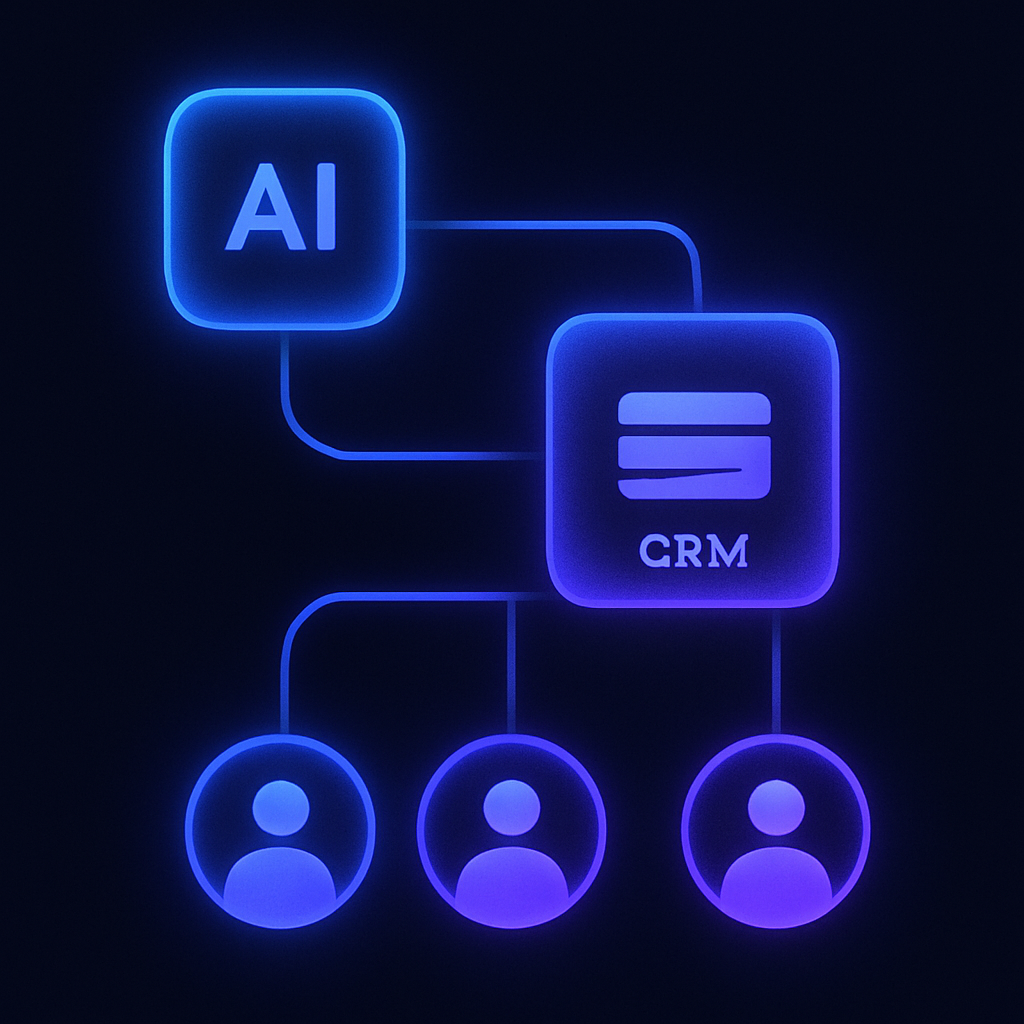
This changes the role of CRM from a passive database to an active operating layer for customer-facing teams. The best systems now help businesses:
- Prioritize opportunities based on behavior and intent
- Detect churn signals before they become obvious
- Summarize long customer conversations into usable insights
- Recommend the next best action for sales and service teams
- Reduce manual data entry and repetitive updates
The result is not just efficiency. It is better judgment at speed.
Smarter personalization at every stage of the customer journey
Customers expect relevance. They expect companies to understand their needs without making them repeat themselves at every step. AI makes that possible by connecting data points across channels and turning them into context.
In 2026, AI-enhanced CRM platforms can help teams personalize outreach, support, and retention efforts based on real behavior rather than assumptions. That means:
- Sales teams can tailor follow-ups based on engagement history
- Marketing teams can segment audiences with greater precision
- Support teams can respond with more context and less friction
- Customer success teams can identify expansion opportunities earlier
Personalization is no longer limited to first names in emails or broad audience segments. With AI, it becomes operational. Every interaction can reflect what the system already knows about the customer’s journey, preferences, and needs.
This is especially valuable for businesses trying to scale without losing the human quality that customers still value.
Automation that actually reduces friction
Many companies adopted automation to save time, but not all automation is useful. In 2026, the most effective CRM automation is the kind that removes friction without removing control.
AI can now automate many of the tasks that slow teams down, including:
- Updating records after calls or meetings
- Routing leads to the right owner
- Drafting follow-up messages
- Classifying support requests
- Flagging incomplete or inconsistent data
- Triggering workflows based on customer behavior
The difference between basic automation and AI-driven automation is adaptability. Rather than following rigid if-this-then-that rules, AI can work with patterns, context, and priorities. That makes workflows more resilient and less dependent on perfect manual input.
For growing businesses, this means fewer dropped details, faster response times, and less operational drag.
Better forecasting and sharper decisions
Forecasting has always been one of the hardest parts of CRM. Sales pipelines are dynamic, customer behavior changes, and internal reporting often lags behind reality. AI improves forecasting by analyzing patterns across historical and current data more effectively than manual review alone.
In practice, AI can help teams answer questions such as:
- Which deals are progressing and which are stalling?
- Which accounts are most likely to renew or expand?
- Which channels are driving the highest-quality pipeline?
- Where are teams losing momentum?
The value here is not just more data. It is better signal. When AI highlights anomalies, trends, and risks early, leaders can respond before small issues become larger ones.
That makes CRM more than a reporting tool. It becomes a strategic advantage.
What this means for sales, marketing, and service teams
AI is changing CRM in different ways across the organization.
Sales
AI helps sales teams spend more time on meaningful conversations and less time on admin work. It can score leads, summarize meetings, suggest next steps, and improve pipeline hygiene.
Marketing
AI gives marketing teams a better understanding of audience behavior. It improves segmentation, campaign targeting, content relevance, and lead handoff quality.
Customer service
AI enables faster triage, more accurate routing, and more informed responses. It also helps service teams identify recurring issues and opportunities to improve the customer experience.
Customer success
AI supports proactive account management by flagging engagement changes, usage drops, or renewal risk earlier than manual monitoring typically would.
The common thread is simple: better context leads to better decisions.
What businesses should prioritize in 2026
Adopting AI in CRM is not just about adding features. It is about creating a system that works the way your teams actually operate.
That means focusing on a few key priorities:
- Clean, connected data across systems
- Clear use cases tied to business outcomes
- Automation that reduces manual work without creating blind spots
- Governance around privacy, permissions, and accuracy
- A CRM structure that can support AI insights, not just store them
Companies that treat AI as a layer on top of broken processes will not see much value. Companies that use it to improve workflows, data quality, and decision-making will.
Practical takeaways
If you are evaluating how AI should fit into your CRM strategy, start here:
- Audit the tasks your team repeats every day.
- Identify where data entry or follow-up delays create friction.
- Map the customer journey and find the biggest drop-off points.
- Decide which decisions should be supported by AI, not delegated to it.
- Make sure your CRM data is organized enough for automation to work reliably.
These small steps create a clearer path to meaningful adoption.
The future of CRM is more adaptive, not more complicated
The best technology reduces complexity instead of adding to it. That is the promise of AI in CRM for 2026. It helps businesses act faster, personalize more effectively, and use their data with more purpose.
For teams that want to build stronger customer relationships while scaling operations, AI-powered CRM is becoming essential. Not because it is trendy, but because it makes modern customer management more practical.
At ScaleNova, we believe the strongest systems are the ones that connect software, automation, and strategy into a single growth engine. AI is now one of the most important parts of that equation.
See how it comes together in practice. Explore ScaleNova CRM and put AI-powered automation to work in your customer relationships.