July 3, 2026
How Small Businesses Can Use AI to Save Time and Reduce Costs
Learn how small businesses can use AI to automate routine work, cut costs, and free up time for higher-value growth activities.

How Small Businesses Can Use AI to Save Time and Reduce Costs
Small businesses rarely have the luxury of excess time, extra headcount, or long implementation cycles. Every hour matters, and every process has to justify its cost. That is why AI has become so valuable for growing teams: it helps remove repetitive work, speed up decisions, and reduce the strain on limited resources.
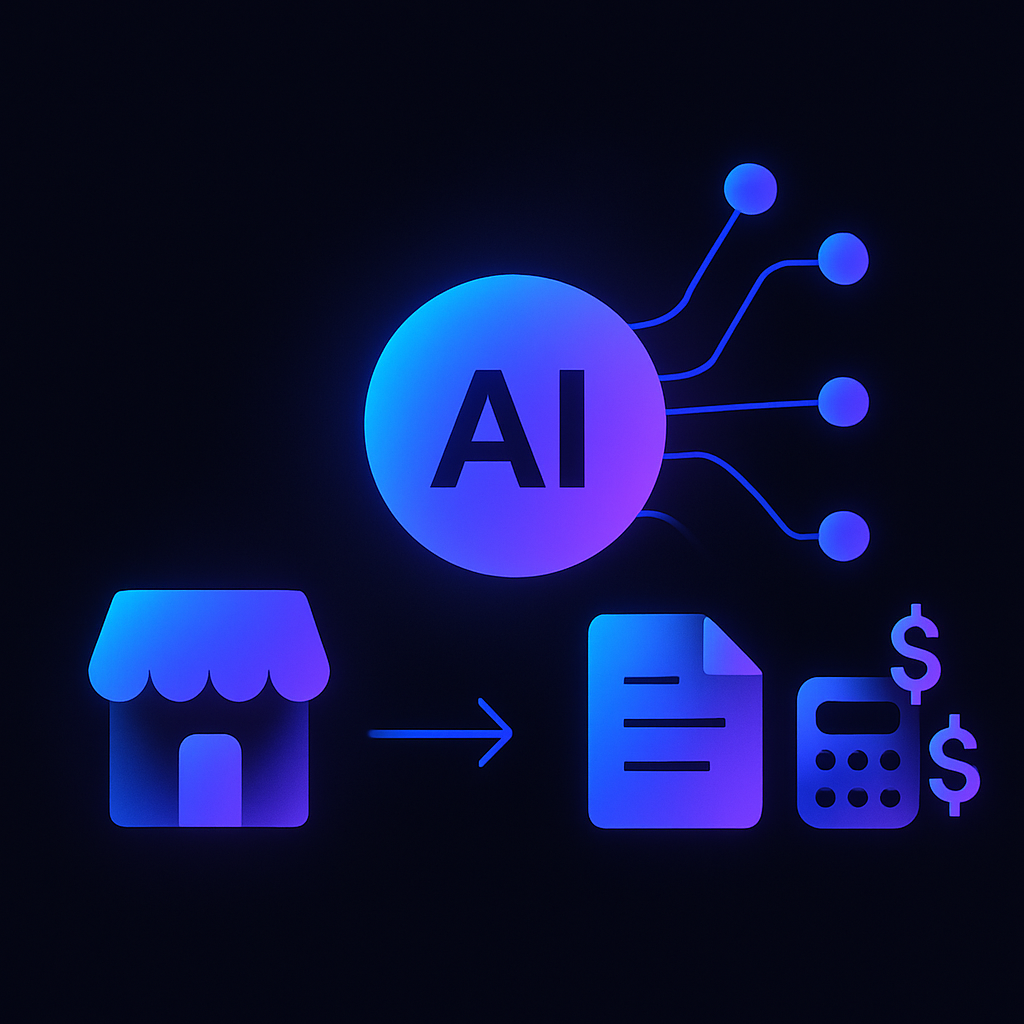
Used well, AI is not about replacing people. It is about giving small teams more capacity. The right tools can handle administrative tasks, support customer communication, improve marketing output, and streamline operations so your team can focus on the work that actually moves the business forward.
Where Small Businesses Lose the Most Time
Most small businesses do not lose time in one dramatic place. They lose it in dozens of small ways.
Common bottlenecks include:
- Repeating the same customer replies
- Manually sorting leads or inquiries
- Creating content from scratch every week
- Updating spreadsheets and internal records
- Chasing follow-ups and reminders
- Searching for information across disconnected tools
These tasks are necessary, but they do not always require human judgment. That is where AI can make a meaningful difference. When routine work is automated or accelerated, your team gets back time for sales, service, planning, and growth.
How AI Reduces Costs Without Cutting Quality
For many owners, cost reduction sounds like a shortcut that lowers standards. In practice, AI often improves consistency while reducing waste.
Here are a few ways it helps:
1. Automating repetitive admin work
AI can handle scheduling, inbox triage, data entry support, document summarization, and task routing. That means fewer manual handoffs and less time spent on low-value work.
2. Improving response speed
When customers ask for basic information, AI-powered chat tools and message assistants can provide quick answers or guide them to the right next step. Faster responses often lead to better customer experience and fewer missed opportunities.
3. Supporting marketing production
Small teams often struggle to create enough content consistently. AI can help draft outlines, repurpose long-form content into shorter formats, generate first-pass ad copy, and assist with brainstorming. That reduces production time and helps maintain a steady marketing rhythm.
4. Making internal operations more efficient
AI can help summarize meeting notes, extract action items, and organize information across systems. It can also support workflow automation so routine processes happen with less manual oversight.
5. Helping teams work with less friction
When employees spend less time on repetitive tasks, they can spend more time on revenue-generating or relationship-driven work. That is where cost savings become more strategic: not by doing less, but by making better use of the time you already pay for.
Practical Ways to Use AI in a Small Business
The best AI use cases are usually the simplest ones. Start with tasks that happen often, follow a predictable pattern, and do not require deep judgment.
Customer support
Use AI to assist with frequently asked questions, draft replies, categorize incoming messages, and route requests to the right person. This can be especially helpful for businesses that receive a steady flow of inquiries but do not need a full support team.
Sales and lead handling
AI can help qualify leads, summarize intake forms, draft follow-up emails, and remind your team when a prospect has gone quiet. This keeps opportunities moving without relying on memory alone.
Content and marketing
AI can speed up blog outlines, social captions, email drafts, product descriptions, and ad variations. The key is to treat AI as a drafting assistant, not a final author. Human review keeps messaging sharp and on-brand.
Operations and documentation
Use AI to summarize internal docs, generate checklists, and organize project updates. This is especially useful for teams that need to stay aligned without spending too much time in meetings.
Reporting and analysis
If your business works with regular reports, AI can help summarize trends, identify patterns, and highlight anomalies faster than manual review alone. That does not replace business judgment, but it does make review more efficient.
How to Choose the Right AI Use Cases
Not every AI tool will be worth your time. The best place to start is with processes that are:
- Repetitive
- Time-consuming
- Easy to standardize
- High enough volume to matter
- Low risk if partially automated
A good rule: if a task happens every day or every week and follows the same pattern, it is worth exploring.
Before adopting a tool, ask:
- What problem are we solving?
- How much time does this currently take?
- Who will manage or review the output?
- What happens if the result is wrong?
- Can this integrate with tools we already use?
The most effective AI adoption is not about adding more software. It is about improving specific workflows.
A Practical Starting Point
If you want to begin without overcomplicating the process, start small.
- Pick one repetitive task that slows your team down.
- Map the current process step by step.
- Identify which parts can be automated, assisted, or standardized.
- Test one AI tool or workflow improvement.
- Measure whether it saves time, improves consistency, or reduces handoff errors.
This approach lowers risk and helps your team build confidence. Once one workflow works well, you can expand to other areas.
Actionable Takeaways
- Start with repetitive tasks, not ambitious transformations.
- Use AI to assist people, not replace decision-making.
- Focus on workflows that save time every week.
- Keep humans involved in review, quality control, and customer-facing decisions.
- Build gradually so the process is sustainable.
Building an AI System That Actually Helps
AI works best when it is connected to the way your business already operates. A standalone tool may offer short-term convenience, but real value comes from integrating AI into your systems, workflows, and customer journey.
That can include custom software, automated processes, internal dashboards, content systems, or customer support workflows. For small businesses, this is where the biggest gains often appear: fewer manual steps, fewer delays, and better use of team capacity.
At ScaleNova, we help businesses design technology that supports growth instead of slowing it down. That means building practical AI solutions, automating routine operations, and creating systems that make small teams more efficient.
Final Thoughts
AI is no longer reserved for large companies with deep technical resources. Small businesses can use it now to save time, reduce overhead, and improve consistency across key parts of the business.
The goal is not to automate everything. The goal is to automate the right things. When AI handles repetitive work, your team can focus on customer relationships, strategy, and growth. That is where the real value lies.