August 5, 2026
Why Every Business Needs an AI-Powered Knowledge Base
Discover how an AI-powered knowledge base improves support, speeds onboarding, and helps teams scale with less friction.

Why Every Business Needs an AI-Powered Knowledge Base
Customers, employees, and partners all want the same thing: fast, accurate answers. The challenge is that most businesses store critical information across documents, chat threads, inboxes, ticketing tools, and internal wikis. The result is slow support, repeated questions, inconsistent responses, and wasted time.
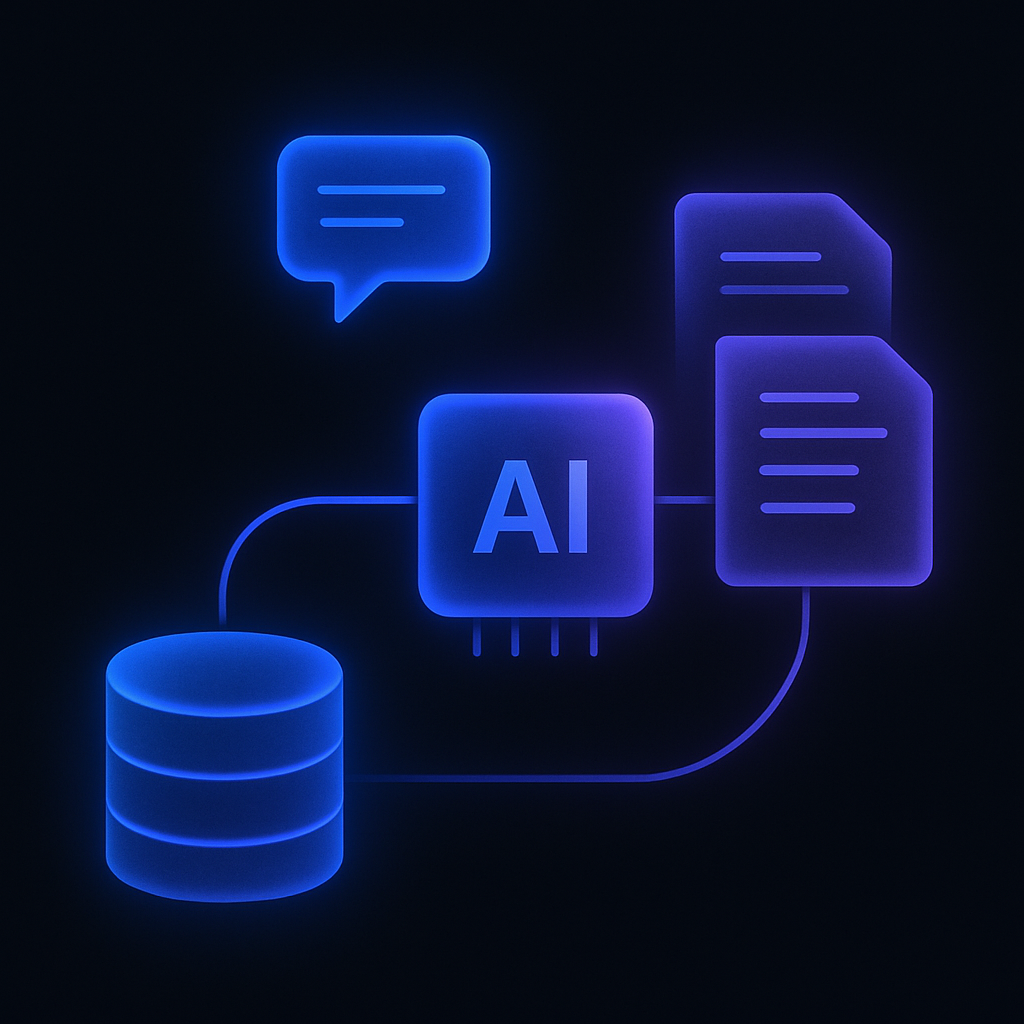
An AI-powered knowledge base solves this by making company knowledge easier to find, easier to use, and easier to keep current. It is more than a content library. It is a system that helps people get the right answer at the right moment, without waiting on someone else to search for it.
For growing businesses, that shift matters. When knowledge becomes accessible, teams move faster, customers get better service, and operations scale with less friction.
What an AI-powered knowledge base actually does
A traditional knowledge base stores articles, FAQs, and process documents. An AI-powered knowledge base adds intelligence on top of that content.
Instead of forcing users to browse folders or guess the right keyword, AI can:
- understand natural language questions
- surface the most relevant answer quickly
- summarize information from multiple sources
- recommend related articles or next steps
- identify gaps in existing documentation
- support self-service across internal and external teams
In practice, this means a support agent can find the right troubleshooting step in seconds, a new hire can complete onboarding without constant help, and a customer can resolve a common issue without opening a ticket.
The business case is simple: less friction, more scale
Every business accumulates knowledge as it grows. The problem is that growth often makes knowledge harder to manage. Teams change, tools multiply, and processes evolve. Without a smarter system, information becomes fragmented.
An AI-powered knowledge base reduces that friction in several ways.
1. It improves customer support
Customers expect quick answers. If they cannot find them, they contact support. If support teams have to search across systems for every question, response times slow down.
With an AI-powered knowledge base, support teams can retrieve answers faster and customers can solve common problems on their own. That lowers ticket volume, shortens resolution time, and improves the overall service experience.
2. It speeds up onboarding and training
New employees lose time when they have to ask where to find basic information. Managers also lose time repeating the same explanations.
A knowledge base powered by AI can act as an always-available guide for policies, workflows, product details, and internal procedures. That helps new team members become productive faster and reduces dependency on one person’s memory.
3. It keeps institutional knowledge from getting trapped
In many companies, the most important knowledge lives in the heads of a few experienced people. That creates risk. If those people are unavailable or leave the company, critical context can disappear.
Documenting that knowledge is important. Making it searchable and intelligent is better. An AI-powered knowledge base turns scattered expertise into an operational asset that more people can use.
4. It supports consistent answers across teams
When multiple departments answer the same questions differently, confusion follows. Sales may describe a product one way, support another, and operations a third.
A centralized knowledge base creates a single source of truth. AI makes that source easier to use. The result is more consistent communication across customer-facing and internal teams.
Why traditional documentation is no longer enough
Most businesses already have documentation. The issue is usability.
Static documents often fail because they are:
- hard to search
- outdated quickly
- written for the wrong audience
- buried in the wrong tool
- too long for people who need a fast answer
AI changes the experience by reducing the effort required to get value from the content. Users do not need to know the exact title of a document or the exact phrase used in a policy. They can ask a question in natural language and get a useful response.
That does not eliminate the need for well-written documentation. It makes that documentation more effective.
What makes an AI knowledge base effective
Not every implementation delivers the same results. The best systems are built with both structure and usability in mind.
A strong AI-powered knowledge base should have:
- clear content organization
- a clean search experience
- permissions that protect sensitive information
- reliable source material
- regular content maintenance
- integrations with support, CRM, or internal tools
It should also reflect how people actually work. That means thinking about the most common questions, the most common workflows, and the points where people tend to get stuck.
This is where strategy matters. Technology alone is not enough. The content needs to be organized around business outcomes, not just file storage.
The role of AI in operational efficiency
Businesses often adopt AI for automation, but knowledge management is one of the most practical places to start. It is low-friction, easy to understand, and immediately useful.
An AI-powered knowledge base can reduce repetitive work across departments. Support teams spend less time answering the same questions. Operations teams spend less time explaining process. Leadership gains better visibility into where documentation is missing or unclear.
Over time, that creates a compounding effect. Better knowledge access leads to better decisions, smoother execution, and a more scalable business model.
Practical takeaways
If your company is considering an AI-powered knowledge base, start here:
- Audit repeated questions across support, sales, HR, and operations.
- Identify your current sources of truth and remove duplicates where possible.
- Structure content around user intent, not internal department names.
- Prioritize the top 20 questions people ask most often.
- Assign ownership so content stays accurate over time.
- Connect the knowledge base to your existing tools so it fits daily workflows.
These steps create a foundation that makes AI genuinely useful instead of just another layer of software.
Build for scale, not just storage
A knowledge base should do more than hold information. It should make information useful.
That is why AI-powered knowledge bases are becoming essential for modern businesses. They help teams work faster, improve customer experience, preserve expertise, and create a stronger operational backbone.
For companies that want to grow without adding unnecessary complexity, this is not a nice-to-have. It is infrastructure.
The businesses that scale best are the ones that make knowledge easy to access, easy to trust, and easy to act on.